
My first time developing medium format film blew me away. Prior to that, I’d only ever developed 35mm. Most everyone is familiar with that size format. In comparison, 120 film negatives are BIG. My 120 medium format cameras are were all 6×6 (6cm x 6cm or 56mm x 56mm). Square. The bigger negatives allow for higher resolution images, among other benefits.
When I came across an Ansco Viking 6. 3 for sale on Facebook Marketplace, I researched it. The first thing that caught my attention wasn’t necessarily the fact that it uses 120 film, but that it captures negatives in a 6×9 format (6cm x 9cm // 2.25 in x 3.75 in). I knew right then that I wanted it.
I met up with the seller in a convenience store parking lot. Nice guy! Turns out he also collects cameras. I gave him his asking price of $75 without negotiating. I felt like the price was fair and I that I didn’t overpay.
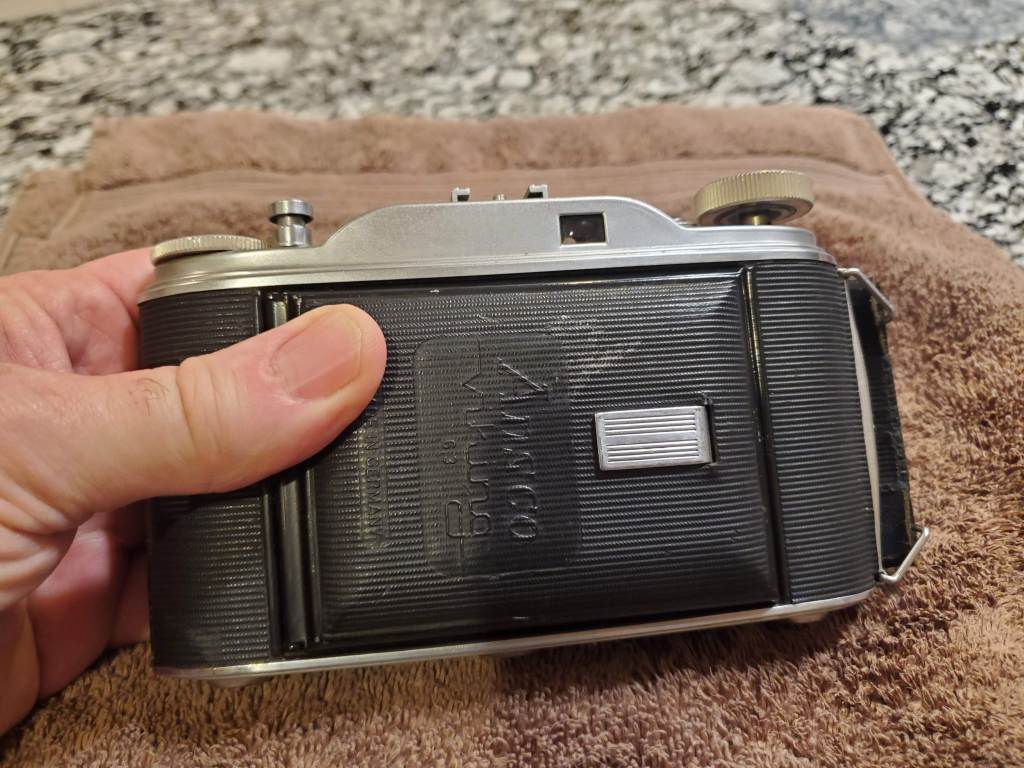
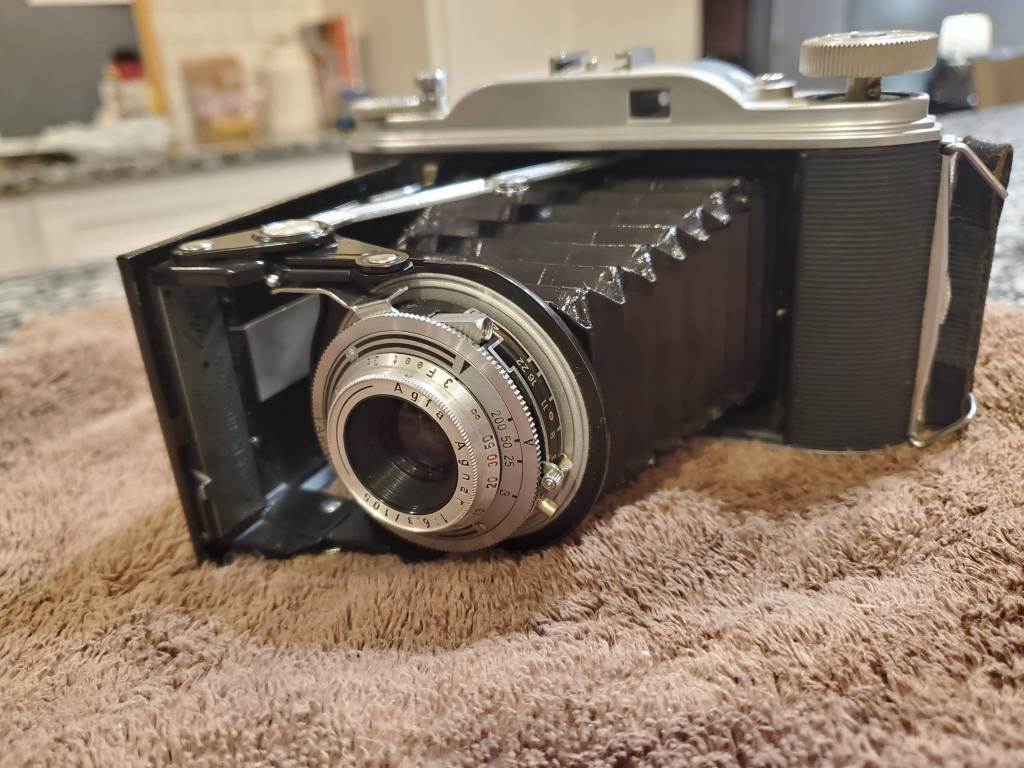
From having purchased Ansco gear before, I was already familiar with the fact that the German company Agfa produced Ansco cameras back in the 50’s for export to the United States. For many Agfa model cameras, there is often an exact Ansco equivalent.
Fewer frames per roll is the tradeoff for even bigger negatives than 6×6.
The Ansco Viking 6.3 (so named because of its f/6.3 lens) was manufactured in 1952. It’s a folder, which is a big plus in my book for a 120 format camera. It makes the camera less bulky and easier to carry around than, say, a TLR. With a standard 6×6 format, one gets 12 frames per roll of film. With 6×9, this is reduced to just eight frames. Fewer frames per roll is the tradeoff for even bigger negatives than 6×6.
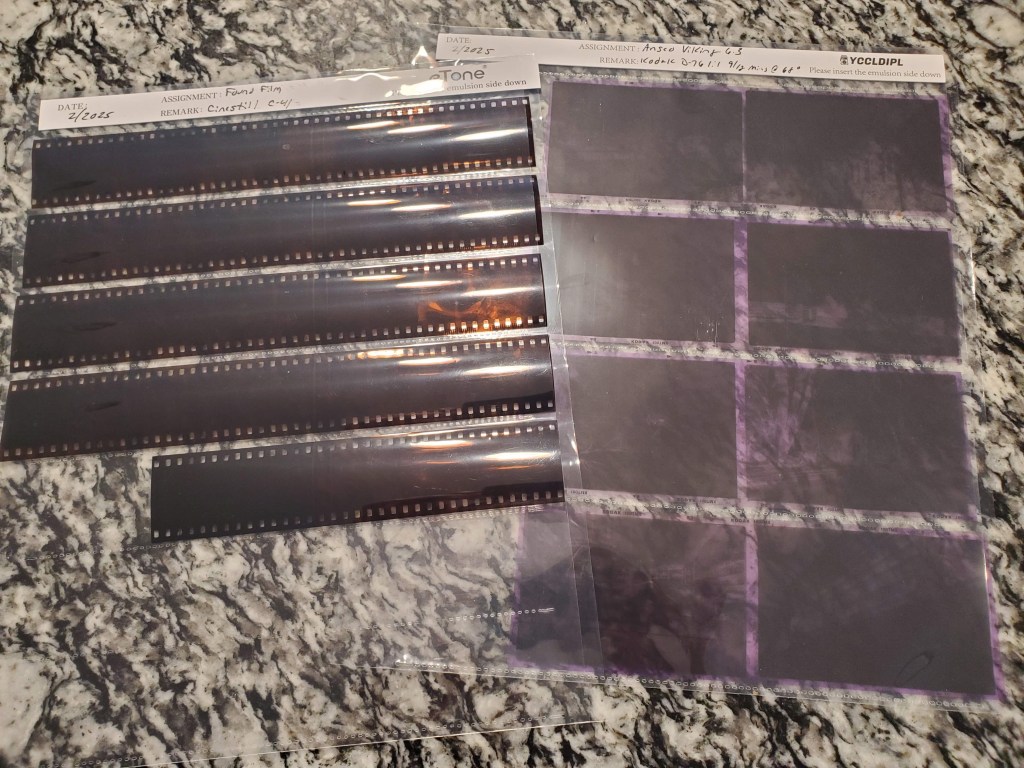
I’ll save actual photos taken with this camera for another post on another day.

 ICT Film Guy
Leave a comment