
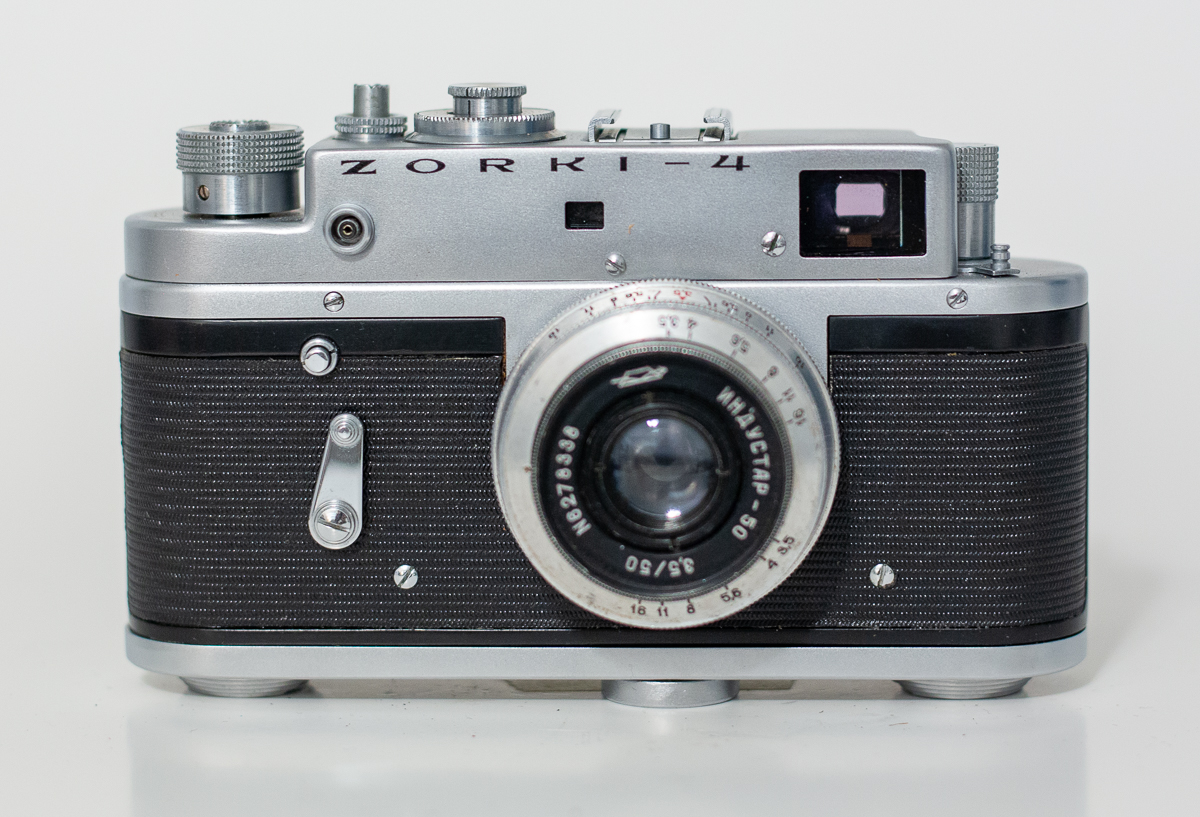
Zorki 4

Technical Specifications
| Serial Number | 73710418 |
|---|---|
| Film Type | 35mm |
| Shutter | Curtain Shutter |
| Lens Model | Various |
| Lens Mount | M39 |
Notes & History
Historical Context
The Zorki 4, produced by the Krasnogorsk Mechanical Factory (KMZ) near Moscow from 1956 until 1973, is widely considered the absolute high-water mark of Soviet 35mm rangefinders. Exported heavily to the West during the height of the Cold War, it was the most successful model in the entire Zorki lineage, selling over two million units. For analog shooters and workbench enthusiasts today, it represents a rugged, heavily mechanical vehicle that delivers the classic, tactile feel of a vintage Leica at an accessible value.
The Zorki series owes its entire mechanical architecture to the early Leica II and III. Following World War II, Soviet factories inherited and replicated German manufacturing blueprints, tooling, and optical formulas. While the very first Zorkis were exact bottom-loading clones of the Leica II, the Zorki 4 evolved the design by adding a fully removable back-and-bottom plate shell, making film loading exponentially cleaner and faster than fiddling with a traditional bottom-loading Leica.
The camera houses a horizontal-travel rubberized cloth focal-plane shutter that is entirely mechanical, requiring zero battery power. It provides a massive array of exposure speeds running from a slow 1 full second down to a fast 1/1000th of a second plus Bulb. Slow speeds are governed by an internal mechanical retarder gear train, giving the camera a classic, slow buzz when executing long handheld or tripod shots.
📷 Photos Taken With This Gear